


——————————————————————————————————————————————————
Editor's Note:
On February 28, 2026, Israel and the United States jointly launched military strikes targeting Iran. Israel announced that its operation was codenamed Operation Roaring Lion, while the United States named its air campaign Operation Epic Fury. In response, the Islamic Revolutionary Guard Corps (IRGC) issued a statement announcing a counter-operation codenamed Operation True Promise-4 directed at the United States and Israel. To date, the military operations initiated by Israel and the U.S. have far exceeded initial projections, evolving into a cascading crisis that is profoundly reshaping both the Middle Eastern and global order. This conflict not only tests the resilience of the Iranian political system but also pushes the spillover effects of the war to the regional and even global levels, prompting nations to re-evaluate their security paradigms and strategic options.
On March 3, China Institute of Innovation and Development Strategy (CIIDS) interviewed Tian Wenlin, Professor of Renmin University of China, on the international implications of the US-Israeli military strikes on Iran, a conflict now spreading across the entire Middle East. Tian highlights Iran's remarkable institutional resilience that has frustrated the US and Israel's regime change agenda: established succession mechanisms have stabilized its power core amid high-level losses, and a robust domestic military industry sustains strong counter-strike capabilities, making a ground invasion a costly quagmire for the US and Israel. The conflict has turned the once-stable Gulf region into a turmoil zone, disrupted the global energy supply chain with the closure of the Hormuz Strait, and shifted the Middle East from proxy wars to direct regional power confrontation, while Israel's prolonged Gaza occupation has made its attempt to unite Gulf states against Iran futile.
Amid the escalating US-Israel-Iran conflict, China upholds an objective and impartial stance. Foreign Minister Wang Yi stresses the core solution is an immediate ceasefire, citing the ancient wisdom that "weapons are ominous tools, not to be used without discretion". He notes this avoidable war benefits no one, as force only sows hatred and fuels crises, urging all to stop military actions and avert escalation and spillover. China proposes five core principles: respecting national sovereignty, rejecting force and the law of the jungle, upholding non-interference and opposing regime change, pursuing political settlement via dialogue, and calling on major powers to act constructively with justice. As a sincere friend of the Middle East, China is ready to work with regional nations to advance the Global Security Initiative, restoring order to the Middle East, tranquility to its people and peace to the world.
——————————————————————————————————————————————————
I. Assessing Iranian Political Stability and U.S.-Israeli Objectives for Regime Change: Institutional Resilience and Strategic Miscalculation
CIIDS: Given the significant loss of high-ranking personnel during the initial stages of the conflict, do you think the internal factors maintaining the stability of the Iranian political system are sufficient to withstand the current crisis?
Tian Wenlin: The precise strikes by the U.S. and Israel against Iranian leadership at the onset of the conflict initially fueled expectations of a "regime collapse." However, the Iranian political system has demonstrated institutional resilience beyond initial projections. This is rooted in the deep institutionalization of its political structure and the maturity of its crisis management mechanisms.
Since its establishment following the 1979 Revolution, the Islamic Republic of Iran has developed a highly standardized institutional system that cannot be easily dismantled. In the course of this conflict, Supreme Leader Khamenei had designated his long-time aide, Ali Larijani, to oversee the overall situation in the event of an emergency. This move ensured that the central leadership could rapidly stabilize the core of power after sustaining significant losses. Currently, the election process for the Supreme Leader is proceeding according to established protocols, with no signs of a power vacuum or internal fragmentation having emerged to date. (Editor's Note: On March 8, 2026, the Iranian Assembly of Experts announced the election of Mojtaba Khamenei, son of the late Supreme Leader Ali Khamenei, as the new Supreme Leader.)
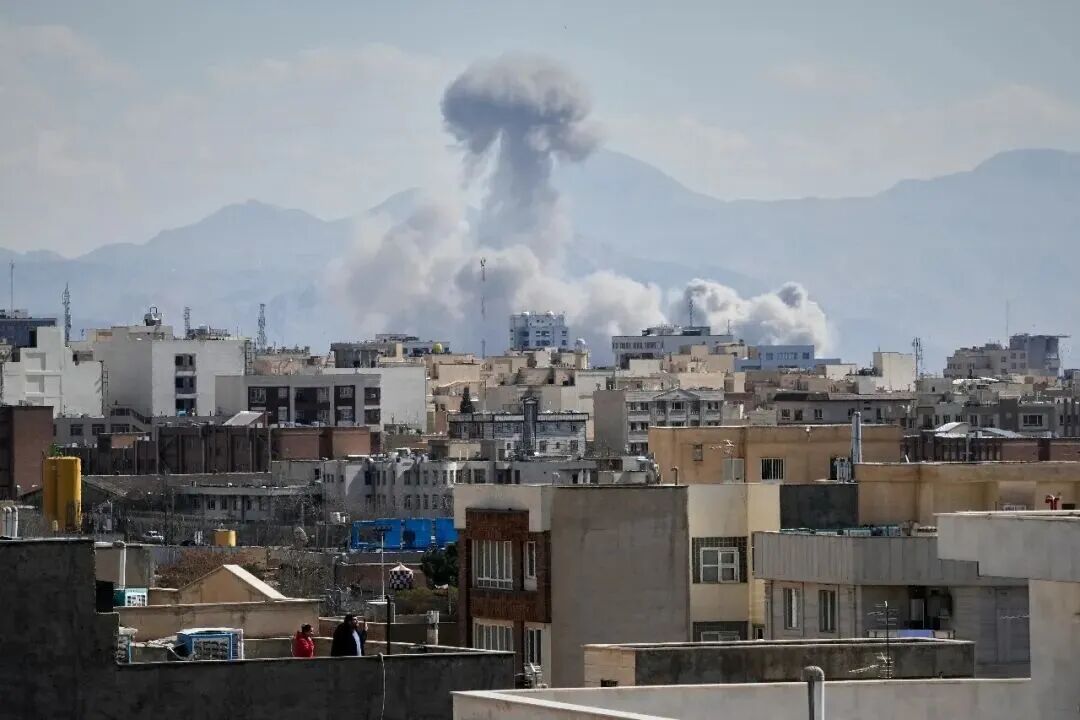
Plumes of smoke rising over Tehran, the Iranian capital, on March 1. (Source: Xinhua)
CIIDS: In your view, under the current circumstances, how probable is the U.S.-Israeli strategy of pursuing continuous military strikes to facilitate regime change in Iran?
Tian Wenlin: At present, this objective appears difficult to achieve. Iran retains its retaliatory capabilities, and its counter-strike strategy underscores its strategic resolve. In the initial phase, by deploying older munitions (such as "Fattah" missiles) in an attrition-based manner for limited retaliation, Iran avoids the over-exhaustion of its national resources while signaling a "sustained retaliatory capability" to the U.S. and Israel. In the later stages, by leveraging its extensive missile stockpiles and domestic production systems, Iran maintains a continuous deterrent against U.S. military bases and critical Israeli infrastructure. This tactical approach exemplifies the typical characteristics of Iran as a regional power.
With a vast land area of 1.64 million square kilometers and a population exceeding 88 million, Iran possesses robust industrial capabilities, particularly in the autonomous production of missiles, naval vessels, and aircraft. This strong military-industrial capacity translates into a high degree of self-defense capacity. Furthermore, Iran's profound historical traditions, thousands of years of civilization heritage, and a relatively mature system of national identity make any attempt to overthrow the Iranian political system exceptionally difficult.
Historical experience demonstrates that the U.S. incurs immense costs when toppling foreign governments, as evidenced by the massive ground force deployment required to overthrow the Iraqi government. Should the United States and Israel rely solely on air strikes, they will find it difficult to fully dismantle Iran's command structures and retaliatory capabilities. Conversely, committing ground troops risks miring them in a "war quagmire," leading to a continuous drain on their national power. Consequently, the "regime change" objective sought by the U.S. and Israel in this war is, in practice, unattainable.
II. War Spillover Effects and the Reshaping of the Middle Eastern Political Landscape: From "Proxy Warfare" to "Direct Confrontation Between Regional Powers"
CIIDS: Currently, there are signs that the scale and impact of the conflict among the U.S., Israel, and Iran are expanding. What are the direct implications of these spillover effects?
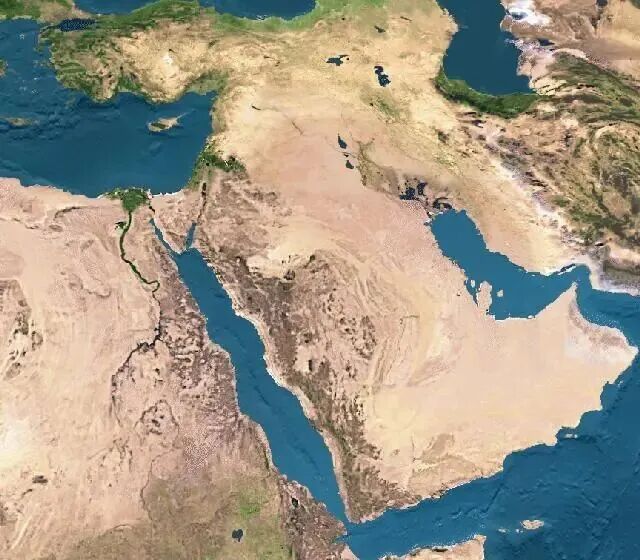
Tian Wenlin: A primary direct impact is the transformation of the Gulf states neighboring Iran from an "oasis of peace" into a "vortex of turmoil." Historically, these nations leveraged oil and gas dividends to establish a "welfare-for-stability" model, making them the most secure region in the Middle East. However, Iran's retaliatory actions have fundamentally shattered this equilibrium.
For the first time, the U.S. military presence in the Gulf has encountered direct strikes. Paradoxically, these nations, supposedly under U.S. protection, have become targets precisely because of that presence, leading to a sharp deterioration in their security environment. Even more critically, Iran's announcement to close the Strait of Hormuz directly threatens regional energy lifelines, plunging Gulf states into profound security anxiety and delivering a massive shock to global energy markets.
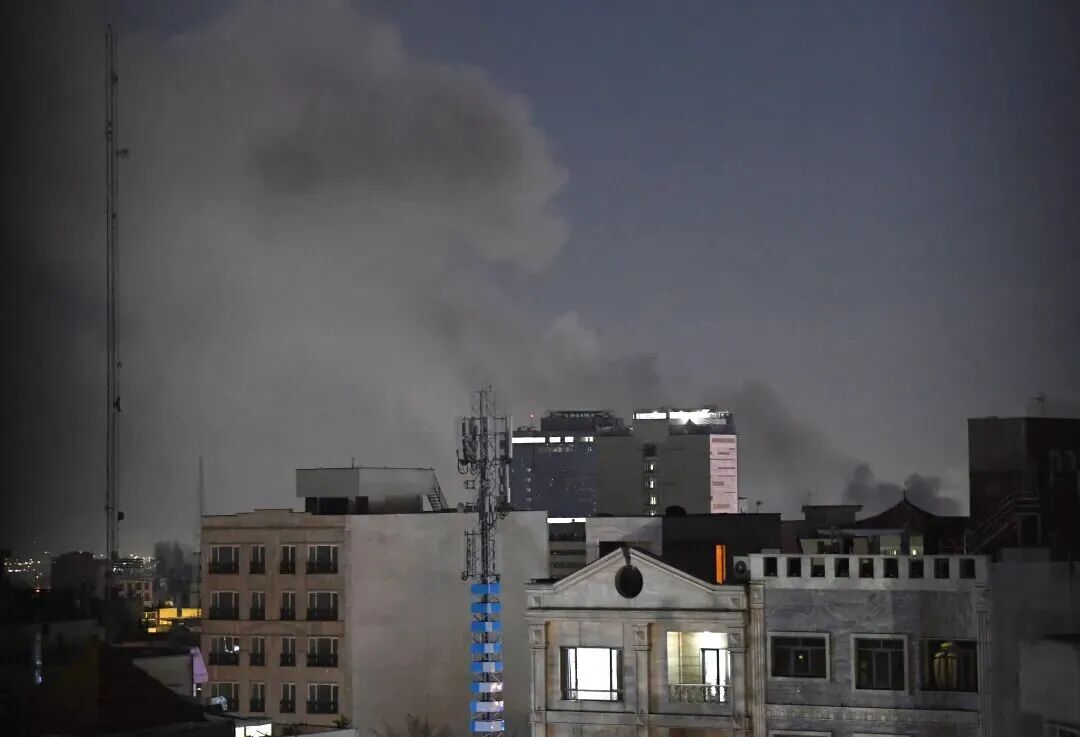
Dense smoke rising over downtown Tehran, the Iranian capital, on the night of March 1. (Source: Xinhua)
CIIDS: What impact does this transformation have on the geopolitical landscape of the Middle East?
Tian Wenlin: Overall, both the scale and intensity of conflicts in the Middle East are expanding simultaneously, marking a transition from "proxy warfare" to "direct confrontation between regional powers." In the past, Middle Eastern conflicts primarily manifested as proxy wars, such as the Houthi forces against Saudi Arabia or Hezbollah containing Israel, where the intensity of conflict was calibrated through the indirect intervention of major powers.
However, the current U.S.-Israeli military conflict targeting Iran has evolved into direct military engagement: the Israeli Air Force and the IRGC are engaged in air combat along the Iraqi and Syrian borders, with the frequency of drone and missile exchanges surging; meanwhile, Iran has launched comprehensive strikes directly against U.S. military bases in the region. As the Gulf states enter a period of instability, the scope and intensity of conflict across the Middle East are rising on all fronts. Given that the Gulf states themselves possess limited self-defense capacity, they will face profound security challenges if the United States can no longer guarantee their safety.
During a phone call with Omani Foreign Minister Sayyid Badr Albusaidi on March 2, Chinese Foreign Minister Wang Yi emphasized: " China values the legitimate appeals of Gulf states and supports them in upholding their sovereignty and national security. Spillover of the war does not serve the fundamental and long-term interests of Gulf states. China expects that Gulf states will enhance their independence, oppose external interference, develop good neighborliness, and strengthen solidarity and coordination, so as to truly hold their future firmly in their own hands." Wang Yi's remarks directly address the core security concerns of the Gulf states. Take Oman, for instance; it has remained largely unscathed in this conflict due to its "independent" and "multilateral" diplomatic stance. By mediating the Iran nuclear negotiations in 2023 and facilitating the reconciliation between Saudi Arabia and Iran in 2025, Oman has earned the trust of the U.S., Israel, and Iran alike through its neutrality, becoming a central regional mediator.
CIIDS: Can Israel achieve its strategic goal of unifying Gulf nations to jointly strike Iran, given that these countries have also come under Iranian attack and suffered significant losses?
Tian Wenlin: There is virtually no possibility that Israel will realize its goal of unifying Gulf states to jointly confront and strike Iran. The 2020 Abraham Accords initially facilitated the normalization of relations between Israel and nations such as the United Arab Emirates and Bahrain, while the 2022 six-party foreign ministers' meeting (Negev Summit)further signaled the collective acceptance of Israel within the Arab world. However, Israel's sustained military operations in Gaza and the deteriorating humanitarian crisis have prompted Arab nations to establish the "implementation of the Two-State Solution" as a non-negotiable precondition for normalization, leading to a de facto stagnation of the Abraham Accords.
Despite the losses of Gulf states due to Iran's retaliatory responses following the joint U.S.-Israeli strikes, Israel's actions have introduced profound security risks to these nations. Consequently, the prospect of Israel successfully unifying the Arab camp to confront Iran remains limited.
(Source: Baidu Baike)
III. Impact on China's Strategic Interests and Challenges to the International Order
CIIDS: Under the current circumstances, what do you consider to be the greatest security risk China faces in the Middle East?
Tian Wenlin: At present, Iran is adopting a strategy to close the Strait of Hormuz, with the intent to target all vessels attempting transit. Under such conditions, the Gulf region, one of the world's core hubs for oil and gas resources, will be severely impacted. The global energy market will also suffer a major shock, triggering cascading effects on global energy markets, regional security, and the international order. For China, the expansion and prolongation of the conflict in the Middle East will pose a direct impact on the "Belt and Road" Initiative (BRI). China maintains extensive cooperation and significant investments across the region, particularly within the Gulf states; a protracted war will inevitably result in a series of losses and pose direct threats to Chinese personnel and projects. From an energy security perspective, while China has implemented a strategy to diversify its oil and gas sources in recent years, its role as a critical node in global heavy chemical and manufacturing industries means that extreme volatility in the prices of commodities, such as oil and gas, will exacerbate risks to China's industrial chains and drive up production costs.
From the U.S. perspective, the initiation of war against Iran by the U.S. and Israel implies that both Russia and Iran, two pillars of the "China-Russia-Iran" strategic triangle, have now entered a state of war. Looking ahead, will China face further containment and threats from the United States and its allies within the international political landscape?
Observed from the perspective of the international order, the current situation in Iran presents a dual nature for China. On one hand, if the U.S. and Israel achieve a "quick and decisive victory" that dismantles Iran's retaliatory capabilities, the U.S. could rapidly extricate itself and pivot to intensify its "containment" of China. In this scenario, the strategic pressure on China and the risk of U.S. allies provoking conflicts would continue to rise.
On the other hand, if Iran's counter-strikes persist and the U.S. finds it difficult to withdraw, it will accelerate the depletion of U.S. global strategic resources, thereby diminishing its capacity to pose a strategic threat to China. Should Iran maintain its resistance, the U.S. and Israel risk becoming deeply mired in a "Middle East quagmire," exhausting their global strategic reserves. Currently, U.S. military deployments in the Middle East already account for 35% of its total overseas forces; if this commitment continues to escalate, the U.S.'s capacity for strategic containment against China will inevitably decline.
The views do not necessarily reflect those of CIIDS.