


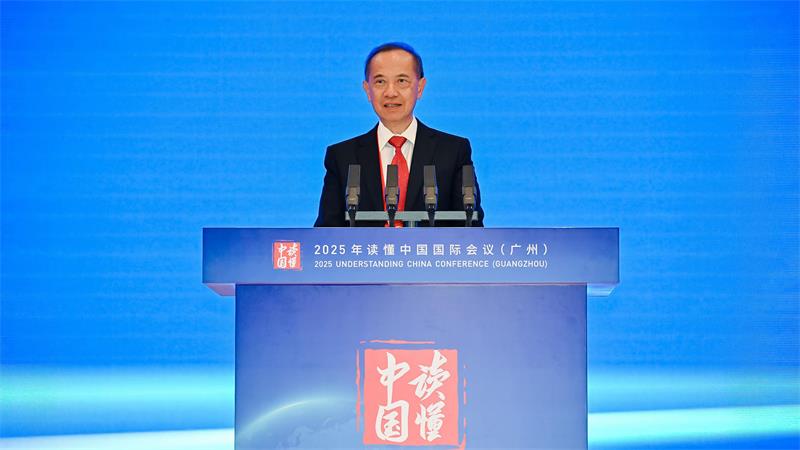
Revised Speech by George Yong-Boon Yeo, Former Minister for Foreign Affairs of Singapore, at Opening Ceremony, 2025 Understanding China Conference
December 1, 2025
Excellencies, distinguished guests, ladies and gentlemen,
This is the 9th Understanding China Conference. I attended the first three meetings, which were held in Beijing in cooperation with the Berggruen Institute. I remember my first conversation with the conference chairman back then, discussing the challenges China faced at that time. However, I am not sure whether, since our first meeting in 2013, China is better or worse understood today. The problem is not a lack of information -- China has been very forthcoming in being transparent to the world about its hopes, plans, and a great deal of information and data. Rather, the problem is emotional: some countries struggle emotionally to accept China’s rise, to see China become the world’s largest economy and a major military and political power.
Now, imagine going back to the 18th century if Europe had organized an“Understanding Europe Conference” (or “Du Dong Xi Fang” as a parallel to “Du Dong Zhong Guo”). In 1793, Britain dispatched Lord Macartney to the Qianlong court. China’s response to the mission back then was dismissive -- they thought there was nothing China could learn from the West. It turned out to be a disaster for China. At that time, if China had understood the tremendous changes taking place in the West in military technology, finance, politics, and social organization, it could have handled the Western challenge much better.
A psychologist identifies five stages in a patient’s response to a serious, irreversible illness: first denial, then anger, followed by bargaining, depression, and finally acceptance. Ironically, the situation has now reversed 180 degrees.
The West’s response to China’s reemergence as a global power has first been one of denial, followed by anger. I believe it is now transitioning from anger to bargaining. However, it will take time before the West fully accepts this reality and seeks truth from facts --“seeking truth from facts” is the motto of the Communist Party of China. It is easy to say “seek truth from facts,” but it is never easy to achieve, because human beings are subjective and emotional. It is in China’s interest to present the facts so that the West can be objective, but this will not happen overnight.
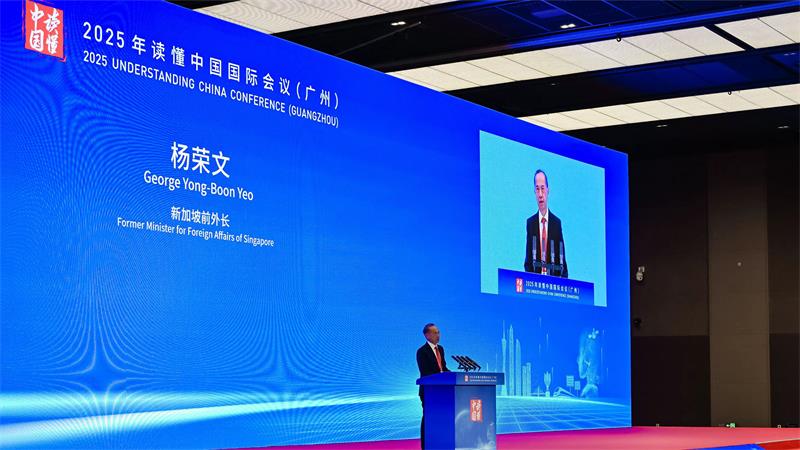
We need to persist in our efforts, and conferences like“Understanding China” (Du Dong Zhong Guo) are invaluable in this regard. We must also be patient. A few months ago, I attended the Peace Forum at Tsinghua University, which aims to build friendships and cooperation. Looking around, I noticed there were hardly any senior American officials present. So I asked Yan Xuetong, the conference organizer, “Did you not invite them?” He told me, “No, we did invite them, but they refused to come because they were afraid of being criticized back home.”
To me, this is a very worrying sign. The world is entering a dangerous period with heightened emotions, and sometimes it seems that countries do not want to understand one another -- not due to a lack of information, but because of conflicting emotions. In such a fragile situation, we need more peacemakers in the world. It is commendable that China has been consistent and persistent in promoting compromise, whether in Ukraine or the Middle East -- striving for understanding, always advocating for peace, sharing the fruits of its development with other countries, and proposing global governance initiatives to remind us all that we share a common destiny on this precious planet. There is no alternative but to coexist: each country has the capacity to destroy the other many times over.
Over 800 years ago, the great saint Francis of Assisi, in a famous prayer, reminded us that we should seek to understand rather than to be understood. Being understood is important, but understanding others is equally vital.
Thank you.